You’re settled in, remote in hand, ready to watch a top-tier team dissect an opponent. It’s mesmerizing. The passing is crisp, the positioning is flawless, and you feel a spark of inspiration. But a nagging question creeps in: does this time actually translate into any real sports improvement for you, or is it just high-quality entertainment? You’ve probably heard the old adage that watching the pros makes you better. But does passive viewing of team form analysis really deliver performance gains, or is it just a comfortable myth?
Here’s the raw fact: slouching on the couch while the game washes over you will do almost nothing for your game. It’s a trap. The difference between wasted hours and genuine skill development lies in the switch from passive consumption to active, brutal analysis. This isn’t about motivation; it’s about observational learning done right. You can absolutely improve by watching, but only if you stop just watching and start actively dissecting.
This piece isn’t fluff. It’s about breaking down the precise, chaotic, and often uncomfortable ways you need to watch to actually see a difference in your own performance. The promise here is simple: you’ll never watch a game the same way again. Because yes, you can improve your game by watching, but only if you approach it with the right, slightly obsessive, mindset.
The Myth of Passive Absorption: Why Just Watching Isn’t Enough
Let’s cut straight to it: most people genuinely believe they’re learning just by watching. They park themselves in front of a screen, eyes locked on some elite athlete’s every move, and assume some kind of magic transfer will happen. That’s a dangerous illusion. And according to a well-known source on skill acquisition (butterflyonline.com), simply watching high-level competition does not automatically make you better. The trap? Blind imitation. You see a flashy crossover from Kyrie Irving—that ankle-breaking, body-contorting masterpiece—and you think: “I can do that.” But your handle isn’t even close. Your explosiveness is a fraction of his. Your footwork? Not even in the same biomechanical universe. So you try to copy the move, and what do you get? A clunky, off-balance mess that actually makes your game worse. The ‘outer shape of the stroke’—that pretty technique—is meaningless without the underlying physical foundation. Strength, speed, coordination: those aren’t things you borrow from a video. Trying to force your weekend-warrior body into a pro’s shape disrupts your own stability. You develop bad habits, not improvement. Passive watching? It’s a comfortable lie. Real learning demands more.
The Problem with Pure Imitation
Here’s where things get really chaotic: technique copying isn’t just ineffective—it’s destructive. Take the insight from butterflyonline.com: “If you ignore these factors and simply copy someone else, you risk disrupting your own stability.” Your body type, your strength levels, your footwork speed, your technical base—they’re all unique. Imagine a recreational tennis player glued to Rafael Nadal’s full-western grip forehand with that blistering topspin. Without Nadal’s forearm strength, conditioning, and massive racket-head speed, you force your wrist and elbow into a strain they can’t handle. The result? Not a better shot—arm pain, tendonitis, and a stroke that falls apart under pressure. You might pick up bad habits by forcing your body into shapes it isn’t ready for. The biomechanics don’t align. The amateur’s nervous system can’t handle the pro’s timing. Pure imitation ignores adaptation. And adaptation is the only path that doesn’t lead to injury and regression.
The Cognitive Gap: Why Your Brain Can’t Just ‘Record’
Sports psychology research on observational learning—like work from huffsports.com—shows something crucial: athletes who engage in active mental rehearsal see real gains; passive viewers do not. Your brain isn’t a hard drive that simply records motion. Mirror neurons fire, sure, but without deliberate mental processing, nothing sticks. I’ve watched coaches who make players close their eyes and visualize a playafter* watching film—active reconstruction. That’s the cognitive heavy lifting. Improvement doesn’t come from eyeballs glued to a screen. It comes from mental effort, from re-running the sequence in your mind, from askingwhy* a move worked. Passive watching? It’s a spectator sport. You want to get better? Start thinking, not just staring.
What Top Performers Actually Teach Us: Learning the Thinking, Not the Shape
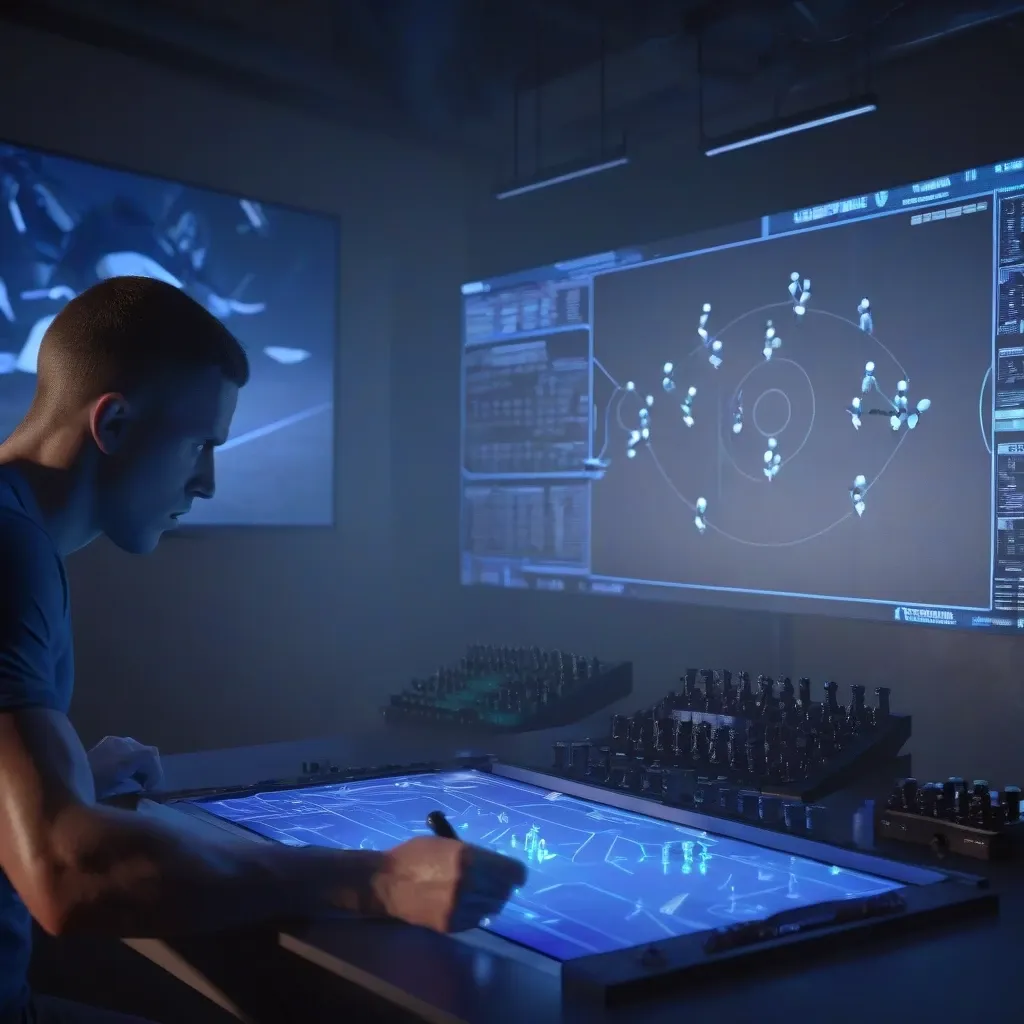
The real value of watching elite team form isn’t found in the mechanics of a jump shot or a tackle. It’s in the decisions that happen before the action. Too many players waste hours copying the shape of a pass or the arc of a three-pointer, missing the cognitive layer that separates pros from amateurs. By applying the butterflyonline.com framework—analyzing shot selection, placement decisions, tactical structure, and stability under pressure—you unlock the hidden curriculum of sport. Take soccer: watch how a top-tier midfield group consistently feeds the same wide player during crucial attacks. It isn’t predictability; it’s recognition. They see a defensive mismatch—maybe the fullback is slow to recover or the winger has a height advantage on a smaller opposite number. The pass isn’t a habit; it’s a diagnosis. That is game intelligence in action. These elite performers are not repeating movements; they’re reading probabilities, space, and opponent tendencies in real time. Football IQ isn’t about knowing plays—it’s about knowing why one player sparks the offense in the 70th minute when the defense’s formation frays. When you watch, stop asking what happened and start asking why. The decisions reveal understanding of the game far deeper than any mechanic ever could. That is the aha moment: the shape is a shadow; the thinking is the substance.
Pattern Recognition: Seeing the Game Before It Happens
Film slows the game down. As underdoghoops.com insightfully points out, watching elite footage lets you recognize spacing and rotations, understand the timing on cuts or screens. Consider basketball: the Golden State Warriors flow into their split-cut actions not by accident, but because they see the defense’s defaults before the ball moves. One guard waits a split second, reads that the defender is leaning toward the baseline, and then fires a pass to the weak side. When you watch, do you see the play developing, or just the shot at the end? Pause the tape. Ask yourself: why did that player cut now? What did the defender’s body language tell them? The answer is pattern recognition—anticipation built on hours of seeing the same spacing, the same rotations, the same timing. It’s not magic; it’s deliberate study. This is how basketball IQ grows: not by memorizing plays, but by learning to see the game before it happens.
Pressure Management: Learning from How Teams Handle the Clutch
Pressure reveals true team chemistry. Drawing from prolinesocceracademy.com’s emphasis on assessing a team’s adaptability under pressure and evaluating chemistry between players, watch how a squad responds when the lead shrinks. There’s a story: a basketball team loses a double-digit lead in the fourth quarter but never panics. Their defenders stay calm, their rotations remain disciplined, and their point guard orchestrates without rushed passes. Contrast this with a team that crumbles—players throw up wild shots, switch on defense lazily, start shouting at each other. This is the qualitative data you can’t get from a box score. Pay attention to body language, huddles, and how the coach communicates during timeouts. That’s the real education. Clutch performance is not about talent; it’s about composure anchored in trust. Adaptability under pressure—changing defensive schemes, altering offensive flow without losing structure—is a learned skill. Watch the elite teams fail gracefully and succeed with poise. Their coping mechanisms become your playbook for handling your own high-stakes moments.
The Active Viewing Framework: A Step-by-Step Method to Turn Watching into Learning
Watching a game is passive. Analyzing a game is active. The difference? A notebook, a paused screen, and a specific question you refuse to drop. This framework turns your couch into a coaching lab. You don’t need to be a pro scout; you just need a system that forces your brain to work instead of just ‘vibe’ with the action. Follow these three steps, and you will extract tactical gold from every broadcast.
Step 1: Pre-Game Focus Selection
Don’t try to absorb everything. Your brain will short-circuit and you’ll just end up with entertainment. Before the tip-off, make a deliberate choice. Pick one single system: maybe half-court offense, maybe how the team handles a full-court press, maybe their transition defense when they miss a shot. If you are a point guard, lock onto the opposing guard’s clock management in the last two minutes of a close game. If you play center in soccer, watch how the back line shifts when the ball is on the far wing. This targeted approach yields deeper insights than scattered observation ever will. Write down your focus on a sticky note and tape it to your coffee table.
Step 2: During-Game Questioning
This is the engine. Stop asking ‘what happened?’ and start asking ‘why did it happen?’ When you see a pick-and-roll, don’t just note the score change. Ask: Did the big man ‘show’ or ‘switch’? Why did he make that choice? What was the ball handler reading? Keep a small notebook or a voice memo app open. Jot down questions like: Why did they choose that shot? What was the tactical goal there? How did that player handle pressure? Could I apply that exact read within my own ability? Even if it looks messy, just log the question. The act of writing forces you to pause and see the game differently.
Step 3: Post-Game Personal Application
Your job after watching is not to become the player you observed. That’s impossible and pointless. Your job is to find one principle you can adapt. Don’t copy LeBron’s behind-the-back pass. Learn the principle: ‘He used misdirection to freeze his defender.’ Then test it. Tell yourself: ‘During my next pickup game, I will try one pass that uses eye contact or a head fake to create space. I will test that one principle.’ Summarize one single tactical lesson from the game and commit to trying it in your next practice. That’s how watching becomes real learning.

Building Your Personal Scouting System: How to Study Your Own Team Form
Watching elite teams on film is smart. Watching your own team—your own play—that’s where real growth happens. The jump from spectator to participant changes everything. Film doesn’t lie. As the underdoghoops.com insight nails it: “Film creates accountability—players can’t argue with the tape.” You can feel like you communicated on defense, but the footage shows you pointing at the wrong guy. That sting? That’s the fastest growth accelerator you’ll ever get.
So how do you actually do it? Start by recording your own practices or games. Nothing fancy—a phone on a tripod works. Then build a simple checklist of 3–5 personal focus areas. Examples: “Did I communicate on defense?” “Did I take only good shots?” “Was I in the right help position?” Review the footage with that list in hand. Don’t watch for entertainment; watch for evidence. This builds what huffsports.com called “athletic IQ” — IQ isn’t built through lecture, it’s built through visual learning, repetition, and reflection. Yes, watching yourself can be painful. You’ll cringe at your footwork, your late rotations, your hesitation. But that discomfort is the price of admission to the next level. Embrace it. The tape never lies, and it never forgets.
The 3-Play Review Method
Don’t review an entire game. Pick three critical plays: one where you succeeded, one where you failed, and one neutral play where you could have made a better decision. For the success, ask “Why did this work? Can I replicate it?” For the failure, ask “What was my read? What was my execution?” For the neutral play, ask “What was the better option I missed?” This keeps your film breakdown focused, specific, and actionable. It turns a flood of footage into a growth mindset tool.
Turning Film into Practice Reps
The underdoghoops.com maxim says it best: “Film + Walkthrough + Live Reps = total understanding.” If you notice in film that you consistently get beaten on hedge-and-recover actions, don’t just watch more film. Go to practice and run ten live reps of that exact scenario with a teammate. Film reveals gaps; only reps close them. So here’s the challenge: next film session ends with you writing down one drill to do tomorrow. No excuses. Deliberate practice starts with a single written note.
The Unseen Value: Why Watching Team Form Builds Leadership and Culture
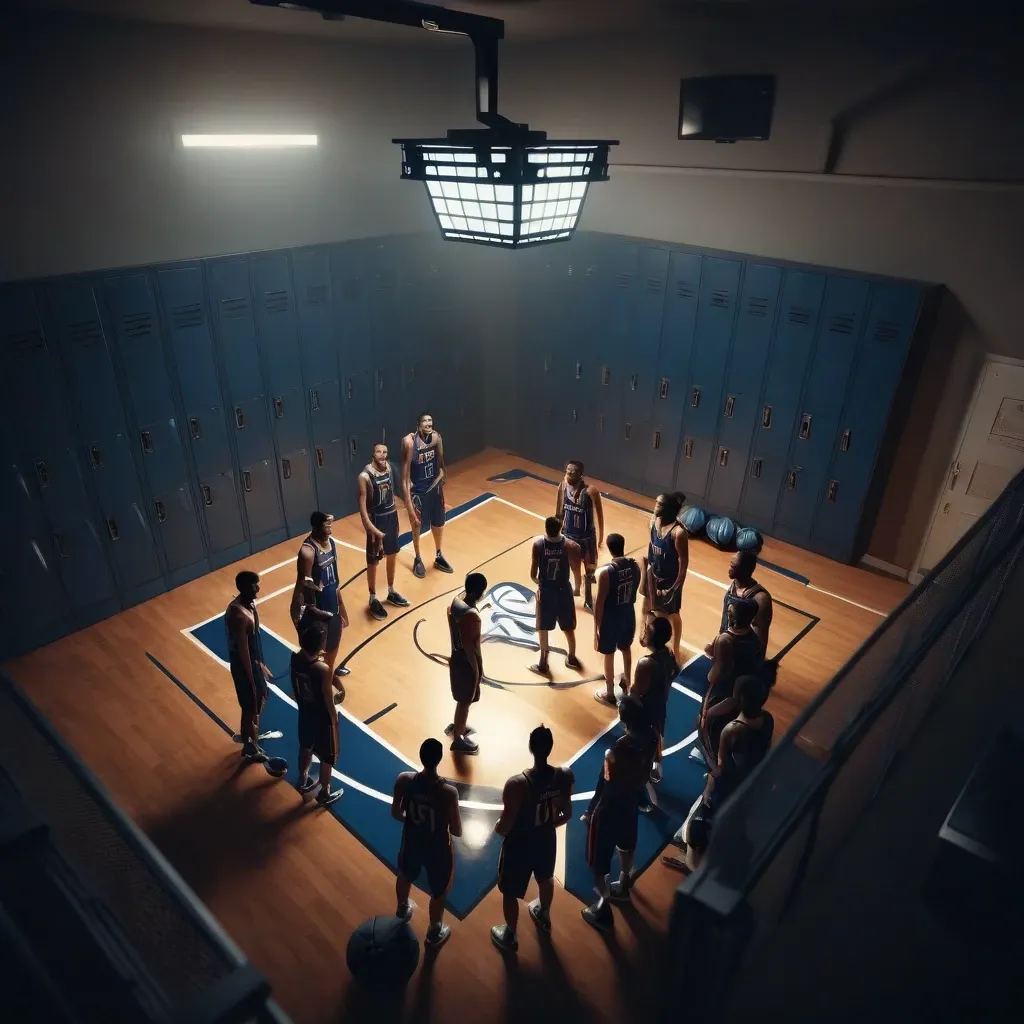
Film work is often sold as a tool for the lone wolf—the kid grinding alone in a basement to fix their own shot. That’s too small of a frame. The real return on investment for a program isn’t individual tweaks; it’s the seismic shift in team culture. When a group sits down to watch, they aren’t just diagnosing X’s and O’s; they are building a nervous system where accountability becomes a reflex. A team that watches together starts to breathe together. You get past the chaos of raw emotion and into the logic of the game, where every player feels responsible for the collective output. That is the alignment that wins close games, not just better shooting percentages.
There is a moment in every great film session that defines the ceiling of a team. I remember a squad where the best player—the one who averaged twenty-five points a night—stood up after a bad loss. The tape showed a simple defensive breakdown, a miscommunication on a screen. He walked to the front, faced the group, and said, “That’s on me. I called out the wrong coverage.” The room went quiet. That single admission changed the entire climate of the locker room. The message was instantly clear: no one is above the work. That moment built a foundation of trust. When a leader owns a mistake on film, it gives permission for everyone else to drop their ego. You stop hearing “I was open” and start hearing “I can help you better next time.” That shift from blame to shared growth is the invisible stamina that carries a team through a tough season. It’s messy, it’s awkward, but it’s real power.
Turning Watching into ‘We’
Solo film study builds a smarter player. Group film study builds a smarter team. The difference is night and day. When you watch alone, you build a vocabulary only you understand. When you watch as a unit, you create a shared language—every player knows exactly what “stay attached to the screen” looks like, or why “defend the pinch post” means a specific foot position. I worked with a team that was disconnected early in the season. They couldn’t string together two defensive stops. We started doing fifteen-minute film sessions. It was chaotic at first. Guys argued different points of view. But slowly, the confusion turned into a common rhythm. They started to finish each other’s sentences. Trust grew because they finally understood why a teammate chose to help weak side instead of staying home. That shared understanding is what turns a collection of individuals into a single unit that moves with instinct.
Conclusion: From Fan to Student of the Game
Improvement is not about becoming someone else. It is about understanding yourself more clearly. That shift—from passive observer to active analyst—changes everything. Stop copying. Start analyzing. Watch with intention, not just for highlights. Then turn the lens inward: watch your own film, track your patterns, and own your mistakes. Share that process with your team because growth happens faster when you are accountable to others. This is not a one-time switch. It is continuous improvement, a growth mindset, lifelong learning. You become a student of the game, not a fan. The next time you sit down to watch a game, ask yourself one question: Am I a fan, or am I a student of the game? The answer will determine everything that follows. Now go see what you can uncover.